Roof and Terrace Leakage
Check visible cracks, open tile joints, damaged waterproofing surfaces, ponding water, roof-slab stains and vulnerable junctions, subject to safe access.

Home Inspection 360 provides rainwater leakage inspection in Chennai for apartments, independent houses, villas, residential buildings and other properties. We assess visible signs of rain-related water entry, ceiling stains, wall dampness, peeling paint, bubbling plaster, mould-like growth and moisture that appears or worsens during the monsoon.
Our inspection focuses on likely water-entry locations such as terraces and roofs, parapet walls, balcony floors, exterior wall cracks, window and door frame joints, service penetrations, rainwater outlets and adjoining ceilings. Visual checks may be supported by thermal imaging and a moisture meter where suitable, accessible and available.
Visual assessment · Thermal imaging where suitable · Moisture checks · Photo documentation
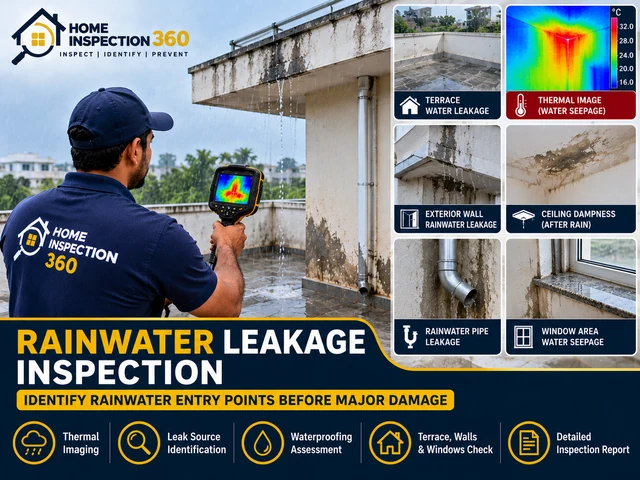
Rainwater may enter through failed waterproofing, open joints, cracks, damaged roof finishes, blocked outlets or gaps around external fittings. Water can travel along slabs and wall cavities before becoming visible, so the stain inside a room may not be directly below the entry point. An inspection helps document symptoms and identify accessible areas that may require closer investigation.
Check visible cracks, open tile joints, damaged waterproofing surfaces, ponding water, roof-slab stains and vulnerable junctions, subject to safe access.
Inspect visible parapet cracks, coping joints, wall-to-slab junctions and gaps where rainwater may enter or remain trapped.
Document visible cracks, damaged plaster, deteriorated paint, open construction joints and damp patches on external or adjoining internal walls.
Check visible floor joints, edge junctions, drainage outlets, balcony slab edges and sunshade areas for signs consistent with rainwater ingress.
Inspect accessible sealant joints, frame perimeters, sill edges and visible gaps that may allow wind-driven rain into the building.
Record ceiling stains, paint blistering, plaster deterioration, damp corners, mould-like growth and moisture patterns inside rooms.
Leakage that appears mainly during rain often points to water entering through the terrace, roof, parapet wall, balcony, exterior walls or window joints and then showing up as ceiling or wall seepage. A rainwater leakage inspection checks these areas using visual assessment, thermal imaging and moisture checks where suitable. It is an assessment, not a waterproofing or repair service.
The inspection is based on visible symptoms, accessible areas, the reported timing of leakage and the property conditions on the visit date.
We ask when the leakage occurs, which rooms are affected and whether the problem appears during heavy rain, after rain, or throughout the year. These details help guide the inspection but do not alone prove the exact source.
We can assess visible rain-related leakage concerns in different residential property types, subject to access, safety and the agreed scope of inspection.
The report reflects the conditions and access available on the inspection date. Hidden defects may not be identifiable through a non-invasive visual inspection alone.
Rainwater leakage can have more than one contributing factor. The inspection report distinguishes visible evidence from suspected causes and recommends further checks when the source cannot be confirmed non-invasively.
Documents visible cracks, water marks, open joints, damaged finishes and moisture-related symptoms found during the visit.
Notes areas that may be contributing to the problem, without presenting an unconfirmed source as a definite diagnosis.
Identifies suitable follow-up, which may include specialist waterproofing assessment, controlled water testing or opening-up work by a qualified contractor.
Home Inspection 360 accepts enquiries for rainwater leakage and dampness inspections across Chennai and nearby areas. Availability and travel arrangements are confirmed when booking.
Yes. We can inspect visible and safely accessible roof or terrace areas, joints, parapet walls, outlets and related interior symptoms. Roof access depends on safety and permission.
A thermal camera can reveal temperature patterns that may be consistent with moisture, but it does not directly see water or guarantee the exact source. Findings need to be interpreted with other observations.
Possible causes include roof or terrace defects, exterior cracks, window joints, balcony junctions or drainage problems. The actual cause depends on the building and needs to be assessed on site.
We accept enquiries for apartments, flats, villas and independent houses. Inspection of common areas, another flat or the floor above requires permission from the relevant owner or building management.
The inspection is an assessment service, not a repair itself. Any repair quotation or waterproofing work should be discussed separately after reviewing the observations and required scope.
No. Concealed pathways, inaccessible areas, dry weather, finishes and other site conditions can limit detection. Further testing or opening-up may be needed to confirm some sources.
Call or WhatsApp 9600696919 with your location, property type, affected rooms and preferred visit time. Your appointment will be confirmed by phone before scheduling.
Rainwater leakage inspection is a visual and non-invasive assessment of accessible areas unless a different scope is agreed in writing. It is not a guarantee that all hidden leaks, concealed defects or structural issues will be detected. Thermal imaging and moisture-meter readings are indicative tools and may be affected by environmental conditions and building materials.
Access to roofs, terraces, neighbouring properties, upper floors, service shafts and common areas depends on permission and safe conditions. Water testing, destructive investigation, plumbing pressure testing, laboratory testing, structural engineering certification and repair works are not automatically included. Serious or potentially structural cracks should be assessed by a qualified structural engineer.
Noticed ceiling leakage after rain, terrace seepage, damp walls, balcony water entry or window-frame leakage? Contact Home Inspection 360 to discuss your property and arrange an inspection.
Please share your locality, property type, affected area, when the leakage occurs and any photographs you have. Booking and appointment timing will be confirmed by phone before the visit.
Home Inspection 360 accepts enquiries for rainwater leakage inspection across Chennai and nearby districts, subject to appointment availability, property access and the scope agreed before the visit. Localities we cover include:
Locality not listed? See the full service areas page, call or WhatsApp +91 9600696919, or book an inspection.